





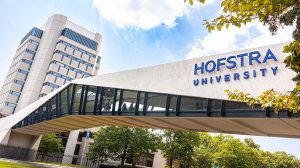




A team of scientists that includes Sina Rabbany, PhD, dean of Hofstra University’s Fred DeMatteis School of Engineering and Applied Science, has pioneered a method for manufacturing functioning human blood vessels that can transport blood, an advancement that could potentially revolutionize the production of human transplantable organs.
“More than 100,000 people on the national transplant waiting list can benefit from a translational approach to repairing damaged organs, but making a functional blood vessel network within complex tissues such as the heart, lung, pancreas, liver, or kidneys has long been a major hurdle” said Dr. Rabbany, professor of engineering and a senior co-author of the study. “The challenge has been in creating a stable vascular network that can undergo self-assembly to allow large organ tissue to repair or rejuvenate itself. This advance now allows us to generate a network of functional blood vessels in a dish.”

The new study, which was published Sept. 9 in Nature, found that a key protein in gestational mice can rejuvenate the properties of adult human endothelial cells – the building blocks of blood vessels – so they regain the ability to grow and adapt to surrounding tissues. The researchers were able to demonstrate this blood vessel regeneration in lab-grown organs and tumors, opening up the possibility of one day creating targeted medicines and techniques that can treat conditions such as cancer or help ailing organs repair themselves, reducing the need for transplants. The research also has implications for COVID-19 patients, particularly elderly patients with underlying conditions that involve vascular damage.
The team of almost 30 researchers included molecular biologists, physicians, and experts in regenerative medicine and other specialties from Weill Cornell Medicine and Great Ormond Street Institute of Child Health at University College London. The seven-year study evolved from the doctoral thesis work of the first author, Brisa Palikuqi, PhD.
As a bioengineer, Dr. Rabbany’s role was to study how the protein, called ETV2, changed the nanomechanical properties of endothelial cells, giving them the ability to create three-dimensional structures that blood can flow through.
“Current ‘organ-on-chip’ models do not allow a single layer of blood vessels to interact with other cell types, which normally happens in our tissues,” he said. “But the ETV2 protein gives the adult endothelial cells the ability to transform themselves into tube-like structures that can transport blood. This then enables us to reset these endothelial cells to a state in which they can grow a very complex network of blood vessels based on microenvironment cues from the surrounding tissue. Essentially this process creates an infrastructure to regenerate a vascular system.”
Dr. Rabbany is also developing a mathematical model of flow through the ETV2 engineered blood vessel network with Hofstra bioengineering student, Rahul Ramanathan ’23, and alum Dominick Romano ’20, in the DeMatteis School’s Cell and Tissue Engineering Laboratory. Over the years, several of Dr. Rabbany’s bioengineering students have collaborated on joint studies with researchers in the Weill Cornell labs, and gone on to pursue graduate and postgraduate degrees in related fields at Tier-1 research universities.
More information on the study, “Adaptable Haemodynamic Endothelial Cells For Organogenesis and Tumorigenesis.” can be found in Medical Xpress: ‘Scientists engineer customized blood vessels to support organ regeneration and identification of cancer treatments.’